⌕ Search
İstihbarat Üzerine/Intelligence Guide/What Should a Good Intelligence Product Be Like?
GRAPHIC 16
Intelligence Guide — Product and ethics

What Should a Good Intelligence Product Be Like?

A quality intelligence product is accurate, timely, relevant, clear and impartial; it clearly separates what is known from what is an estimate.
Prepared by: Furkan Emir Akca — based on the book İstihbarat Üzerine
In the book: Chapter 12 — The Intelligence Analyst’s Guide
Last updated: September 2026

✓ SHORT ANSWER

A quality intelligence product is accurate, timely, relevant, clear and impartial; it clearly separates what is known from what is an estimate.

Graphic

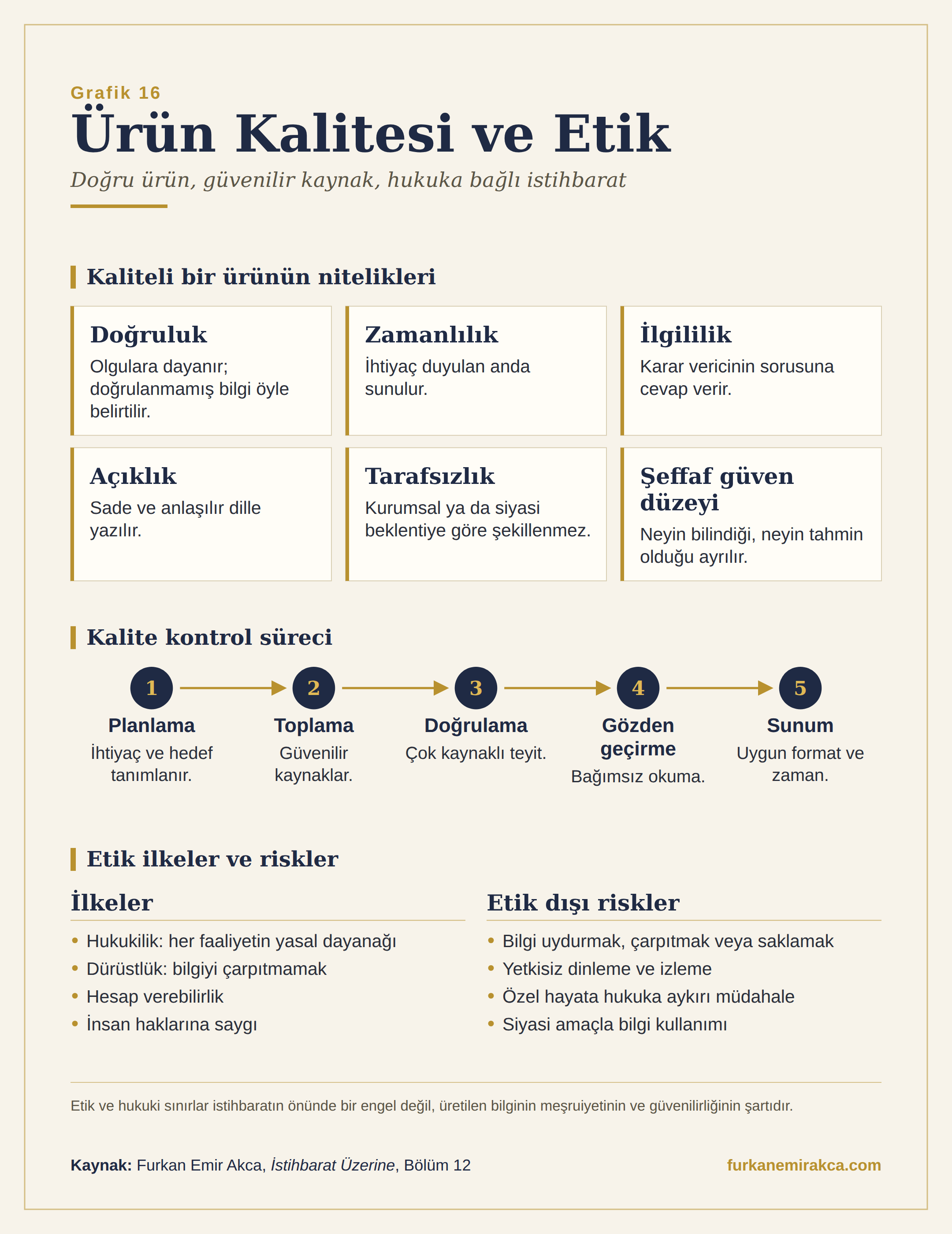
Product Quality and EthicsProduct Quality and Ethics The right product, a reliable source, intelligence bound by law Qualities of a quality product Accuracy: Rests on facts; unverified information is stated as such. Timeliness: Presented when it is needed. Relevance: Answers the decision-maker’s question. Clarity: Written in plain and understandable language. Impartiality: Not shaped according to institutional or political expectations. Transparent level of confidence: What is known and what is an estimate are separated. The quality control process 1. Planning: The need and goal are defined. 2. Collection: Reliable sources. 3. Verification: Multi-source confirmation. 4. Review: Independent reading. 5. Presentation: Suitable format and timing. Ethical principles and risks Principles: Legality: a legal basis for every activity; Honesty: not distorting information; Accountability; Respect for human rights Unethical risks: Fabricating, distorting or withholding information; Unauthorised interception and surveillance; Unlawful interference in private life; Use of information for political purposes Graphic 16 Product Quality and Ethics The right product, a reliable source, intelligence bound by law Qualities of a quality product Accuracy Rests on facts; unverified information is stated as such. Timeliness Presented when it is needed. Relevance Answers the decision-maker’s question. Clarity Written in plain and understandable language. Impartiality Not shaped according to institutional or political expectations. Transparent level of confidence What is known and what is an estimate are separated. The quality control process 1 Planning The need and goal are defined. 2 Collection Reliable sources. 3 Verification Multi-source confirmation. 4 Re- view Independent reading. 5 Presentation Suitable format and timing. Ethical principles and risks Principles Legality: a legal basis for every activity Honesty: not distorting information Accountability Respect for human rights Unethical risks Fabricating, distorting or withholding information Unauthorised interception and surveillance Unlawful interference in private life Use of information for political purposes Ethical and legal limits are not an obstacle to intelligence but a condition of the legitimacy and reliability of the information produced. Source: Furkan Emir Akca, İstihbarat Üzerine, Chapter 12 furkanemirakca.com

Open the graphic at full size · Download as PNG (2160×2800). You may use it for educational purposes with attribution.

Explanation

Quality is not a coincidence but the result of a process: correctly defining the need, collecting from reliable sources, multi-source verification, an independent review and presentation in a suitable format.

Ethical and legal limits are not an obstacle to intelligence; they are a condition of the legitimacy and reliability of the information produced. Legality, honesty, accountability and respect for human rights are the basic principles of this framework.

Fabricating, distorting or withholding information; unauthorised interception and surveillance; unlawful interference in private life and using information for political purposes are both ethical violations and render the product itself worthless.

More in the book

✓ İSTİHBARAT ÜZERİNE

This subject is dealt with in detail in my book İstihbarat Üzerine under the heading Chapter 12 — The Intelligence Analyst’s Guide. The whole book can be read free of charge.

Open the relevant chapter in the PDF (p. 65) · Book page

Related concepts