What Is the Difference between Strategic, Operational and Tactical Intelligence?
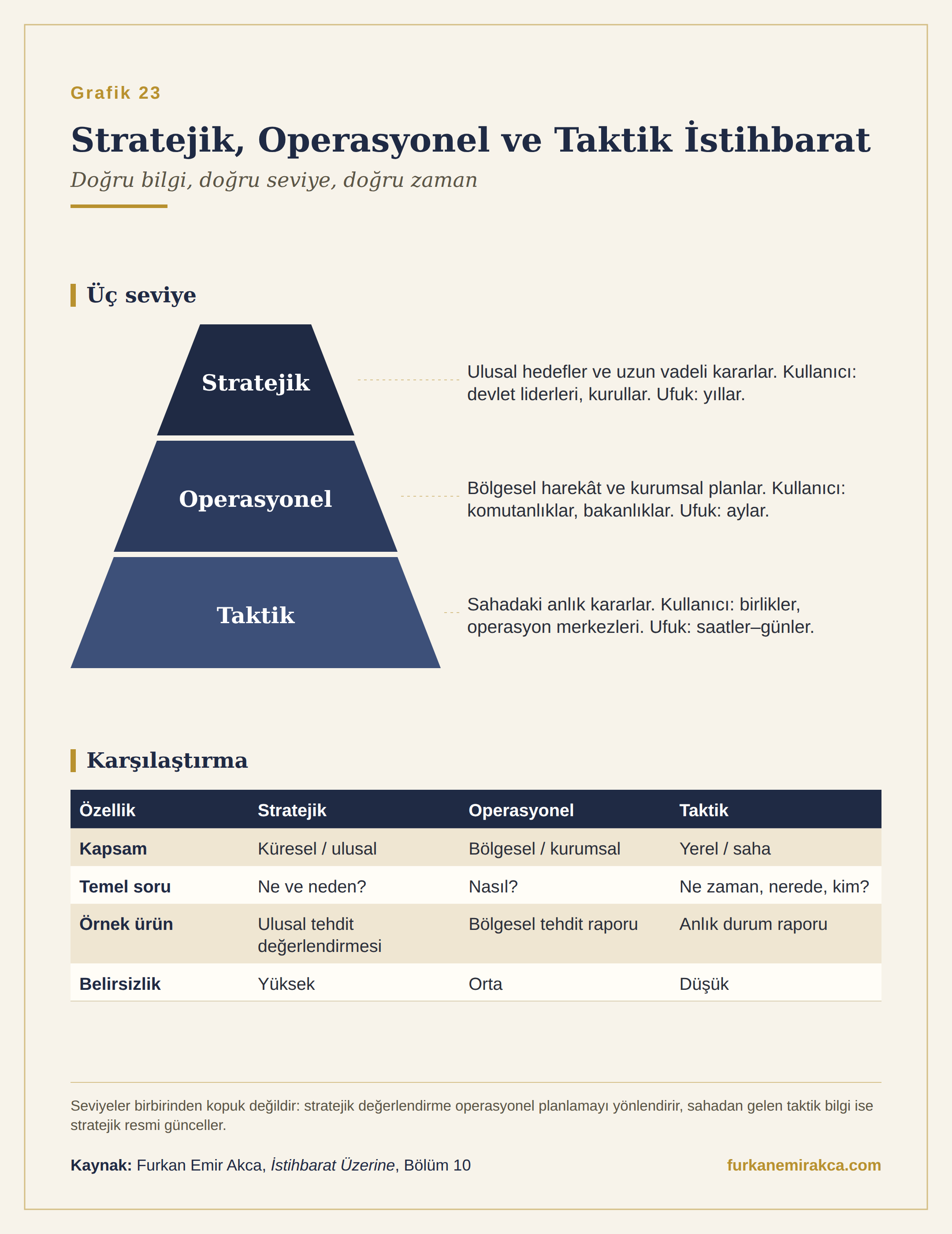
Strategic intelligence supports national goals and long-term decisions, operational intelligence regional operations and institutional plans, and tactical intelligence immediate decisions in the field.
Prepared by: Furkan Emir Akca — based on the book İstihbarat Üzerine
In the book: Chapter 10 — Strategic Intelligence
Last updated: September 2026
✓ SHORT ANSWER
Strategic intelligence supports national goals and long-term decisions, operational intelligence regional operations and institutional plans, and tactical intelligence immediate decisions in the field.
The three levels differ in scope, user and time horizon. The users of strategic intelligence are state leaders and councils, and its time horizon is years. Operational intelligence serves commands and ministries on a scale of months. Tactical intelligence, in turn, is directed at the needs of units and operations centres within hours and days.
Their basic questions also differ: the strategic level asks “what and why?”, the operational level “how?”, and the tactical level “when, where, who?”. Uncertainty is highest at the strategic level and lowest at the tactical level.
The levels are not disconnected from each other: strategic assessment guides operational planning, while tactical information from the field updates the strategic picture.
More in the book
✓ İSTİHBARAT ÜZERİNE
This subject is dealt with in detail in my book İstihbarat Üzerine under the heading Chapter 10 — Strategic Intelligence. The whole book can be read free of charge.
Note on method. Unless a final court judgment exists regarding persons named in these files, incriminating information is presented only together with its source and as an allegation. Detention, arrest or giving testimony does not imply guilt. The evidence labels indicate what a statement rests on, not a verdict on whether it is true.
This is an English translation. The Turkish original is the authoritative text: Türkçe asıl metin