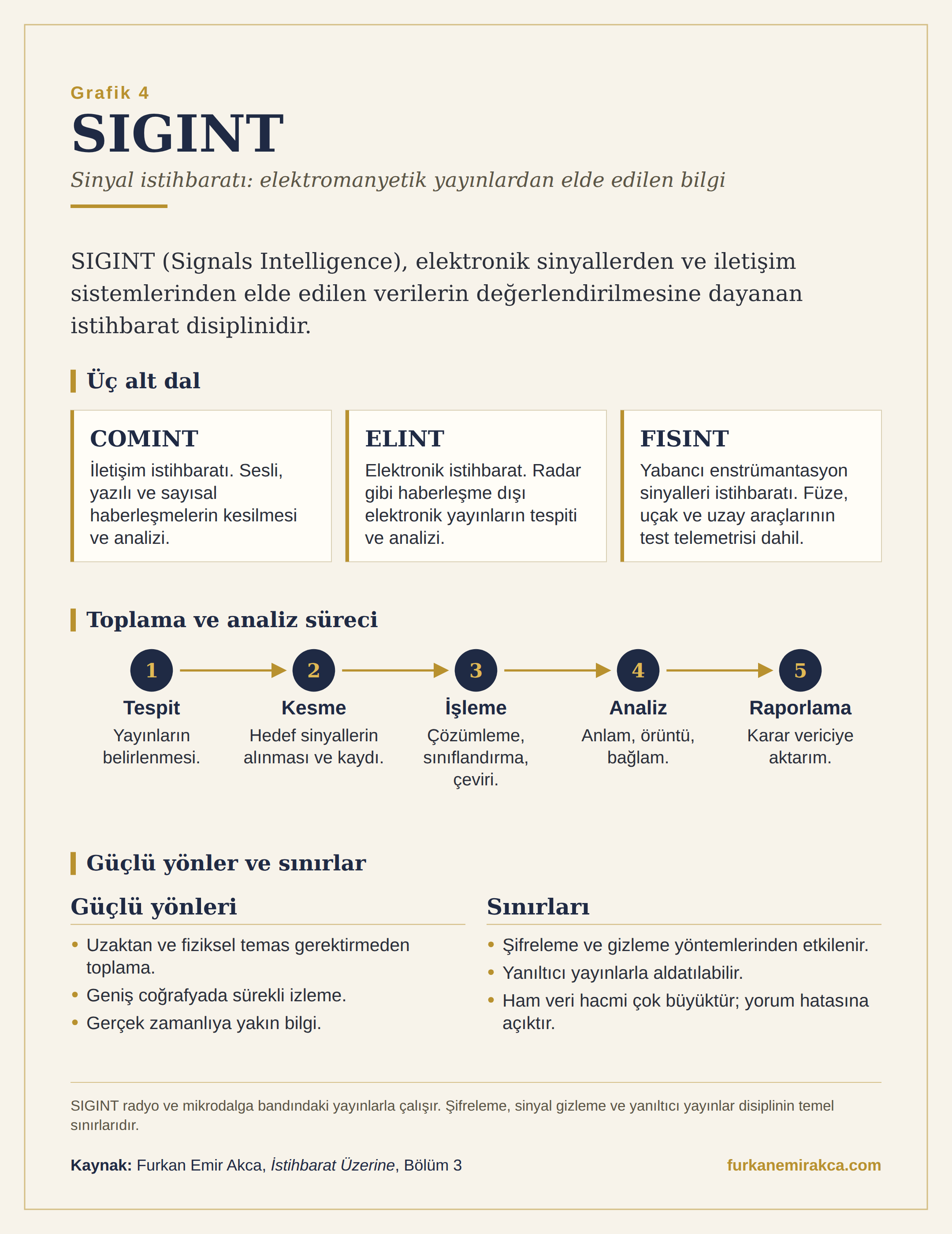
SIGINT (Signals Intelligence) is the intelligence discipline based on assessing data obtained from electronic signals and communication systems. It has three sub-branches: communications intelligence (COMINT), electronic intelligence (ELINT) and foreign instrumentation signals intelligence (FISINT).
Prepared by: Furkan Emir Akca — based on the book İstihbarat Üzerine
In the book: Chapter 3 — Intelligence Sources and Disciplines
Last updated: September 2026
✓ SHORT ANSWER
SIGINT (Signals Intelligence) is the intelligence discipline based on assessing data obtained from electronic signals and communication systems. It has three sub-branches: communications intelligence (COMINT), electronic intelligence (ELINT) and foreign instrumentation signals intelligence (FISINT).
COMINT is the interception and analysis of voice, written and digital communications. ELINT examines non-communication electronic emissions such as radar. FISINT covers instrumentation signals such as the telemetry emitted by missiles, aircraft and spacecraft during tests.
In the modern world communication networks, digital systems and electronic devices produce enormous amounts of data. SIGINT has gained great importance because it can collect this data remotely, without physical contact and over a wide geography.
The limits of the discipline are also clear: encryption and signal concealment methods make collection harder, misleading emissions can deceive the analyst, and the volume of raw data is so large that there is always a risk of interpretive error. SIGINT too reaches its full value only when assessed together with the other disciplines.
More in the book
✓ İSTİHBARAT ÜZERİNE
This subject is dealt with in detail in my book İstihbarat Üzerine under the heading Chapter 3 — Intelligence Sources and Disciplines. The whole book can be read free of charge.
Note on method. Unless a final court judgment exists regarding persons named in these files, incriminating information is presented only together with its source and as an allegation. Detention, arrest or giving testimony does not imply guilt. The evidence labels indicate what a statement rests on, not a verdict on whether it is true.
This is an English translation. The Turkish original is the authoritative text: Türkçe asıl metin